
Guides
How to Reduce Supplier Assessment Fatigue and Boost Participation Rates


Guides
Why primary supply chain data collection is non-negotiable for regulatory compliance
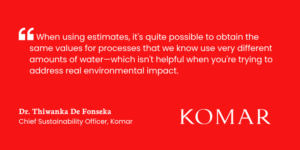
Why estimates and averages aren’t enough for supply chain decisions
The real barrier to supplier participation: It’s not request volume
How effective supplier engagement starts with demonstrating mutual value
Transparency drives supplier engagement: Share how you’ll use the data
Common brand mistakes that reduce supplier participation rates
The five-pillar supplier engagement strategy that achieves 85%+ participation rates
Why standardized assessments like the Higg FEM solve the assessment fatigue problem
Reducing assessment fatigue is a win-win for brands and suppliers

Collecting verified primary facility data across your supply chain is no longer optional: It’s a regulatory mandate for brands and retailers in the consumer goods industry. Under frameworks including the EU’s Corporate Sustainability Reporting Directive (CSRD), Corporate Sustainability Due Diligence Directive (CSDDD), EU Deforestation Regulation (EUDR), Digital Product Passport (DPP), and Environmental Cost labeling requirements (formerly French Eco Score), brands and retailers must now document facility-level environmental and social performance.
In the U.S., the Uyghur Forced Labor Prevention Act (UFLPA) mandates supply chain transparency on labor practices, while California’s Climate Corporate Data Accountability Act (SB 253) requires environmental data and its Transparency in Supply Chains Act (SB 657) requires disclosure of modern slavery and human trafficking risks.
These regulations share a common requirement: primary, verified data from your suppliers and facilities — not estimates, not averages, not spend-based models.
With between 70-90% of a typical brand or retailer’s carbon footprint embedded in upstream operations, primary supply chain data collection is the foundation of credible environmental reporting and effective supply chain risk management.
The typical Worldly brand and retailer customer finds around 60 percent of its suppliers are already reporting data through the platform, providing immediate visibility to the brand without any additional work on the part of those participating suppliers.

Estimates, averages, and spend-based calculations fail to capture the nuances that drive actual supply chain performance and risk. Spend-based models account only for dollars spent — not material choices, production location, facility energy mix, or renewable energy use. This can lead to significant under- or overestimation of environmental footprint, which undermines accurate progress tracking and puts regulatory compliance at risk.
For companies that want to know their risks, increase resilience, and improve their product impacts, estimates and averages are no longer sufficient. Some pitfalls include:
Without primary data, you may be under- or overestimating your company’s environmental footprint, which impedes the goal of making real-world improvements and complying with regulations.
The root cause of low supplier participation is not assessment request volume: It’s an unclear value proposition. Suppliers differentiate between compliance requests (which they complete out of obligation) and opportunities for mutual benefit (which they prioritize). When brands frame supply chain data collection as a one-way reporting burden, participation rates stall. When the same request is positioned as a pathway to benchmarking, cost savings, and competitive advantage, supplier engagement rates jump to 85 percent or higher.
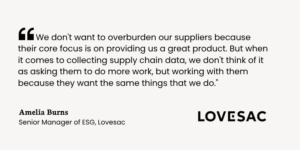
Brands may worry about overburdening suppliers who are already managing production timelines, sourcing costs, staffing issues, and local geopolitical pressures. Yet the barrier to participation isn’t the number of requests — it’s how brands communicate the value of participation.
Supplier engagement requires reframing the conversation from “we need your data” to “here’s how participation benefits your business.” Brands with the highest participation rates share one critical practice: They lead by communicating business benefits (like financial ROI, preferred-partner status, cost savings) before compliance language. This shift fundamentally changes supplier perception of assessment completion from a reporting obligation to a business development opportunity.
Brands and retailers that effectively communicate the value suppliers get from participating in environmental and social assessments achieve better data, higher participation, stronger supplier relationships, and ultimately greater progress toward their sustainability, risk, and compliance goals.
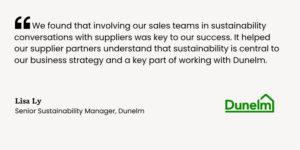
When suppliers complete assessments and hear nothing back — no benchmark results, no feedback, no connection to sourcing decisions — they disengage. Supplier participation is highest when brands close the loop by sharing results, explaining how facility-level data informs sourcing decisions, and demonstrating that participation has tangible benefits and consequences. Transparency about data use is one of the five pillars of effective supplier engagement we’ll cover below.
Suppliers often feel like their hard work completing assessments doesn’t yield them anything. You can change this by sharing assessment results back with suppliers. The most successful brands begin the conversation with how they plan to use their supplier data to inform real business decisions. Facilities that know how a brand plans to use their data — and see those uses put into action — participate at higher rates.
When supplier participation rates fall short of targets, brands often assume they’re asking too much. Instead, they should examine how they’re framing the request. Brands that achieve high participation rates do so by clarifying value and reducing perceived burden. Here are mistakes that signal to suppliers that participation isn’t a priority:
All of these actions send the same message: The assessment request just isn’t that important.
These actions certainly don’t support the idea that assessments have inherent value for suppliers themselves. Brands receive lower-quality data, fewer assessment completions, and fewer verifications. They make less informed sourcing decisions and carry more hidden risk in their supply chain.
Brands with the highest supplier participation rates — often exceeding 85% — share five common practices in their supplier engagement strategy. Each pillar transforms how suppliers perceive assessment requirements, shifting them from a burden to a business opportunity.
Suppliers that understand the business case for participation (e.g. benchmarking, risk reduction, greater resilience, operational savings, achieving climate goals, preferred-partner positioning) are more likely to engage fully. Many brands and retailers don’t emphasize these benefits when conducting their supply chain data collection programs.
Don’t assume suppliers know what’s in it for them. Make it clear from your first outreach. This is the pillar that reframes the entire engagement from a compliance request to a mutually beneficial program.
Brands that engage suppliers months ahead of deadlines see stronger participation and fewer last-minute drop-offs. Early outreach signals that the request is serious and gives suppliers time to prepare without disrupting operations. When outreach starts late, it tells suppliers the assessment is an afterthought — and their response rates reflect that message.
Worldly brand customers that engage suppliers early, with clear timelines and guidance throughout the assessment completion cycle, achieve 85 percent (and higher) assessment completion rates.
Suppliers often feel like their hard work completing assessments doesn’t yield them anything. The most successful brands begin the conversation with how they plan to use their supplier data to inform real business decisions. Facilities that know how a brand plans to use their data — and see those uses put into action — complete assessments at higher rates.
Start and end with how you’ll use the data. Share assessment results back with suppliers, including benchmarking comparisons and facility-level insights they can use to drive their own improvements.
One of the biggest mistakes brands and retailers make is asking their suppliers to complete one-off, proprietary assessments that meet only their own requirements. Accepting a standardized, shared assessment framework is the single most impactful thing a brand or retailer can do to immediately relieve duplicate efforts and assessment fatigue in their supply chain.
When a brand joins Worldly, it finds around 60 percent of its suppliers are already on the platform. This unlocks instant supply chain insights without starting from zero. And the benefit goes both ways: With 45,000+ facilities already in Worldly’s network, suppliers also experience a large degree of overlap that allows them to complete a single assessment and share it with an unlimited number of brand customers. Don’t downplay how large of a benefit this is for suppliers when requesting their participation.

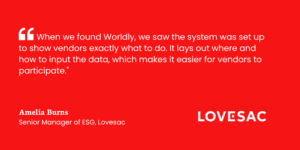
If you’re afraid of becoming the supply chain data collection help desk, choosing an established platform with robust training and support is one of the best things you can do. Worldly provides guided supplier onboarding, AI-powered guidance, 100+ self-paced e-learning courses in multiple languages, and 80+ live webinars annually that give suppliers the support they need without requiring brands to provide it.
Once you’ve chosen to work with such a platform, communicating these benefits to your suppliers goes a long way toward showing them how much support they’ll get during the assessment process.
Standardized assessments solve supplier assessment fatigue by eliminating duplication. Before tools like Cascale’s Higg Facility Environmental Module (Higg FEM) and Higg Facility Social & Labor Module (Higg FSLM), stewarded and governed by Cascale and implemented globally through the Worldly sustainability and supply chain intelligence platform, were adopted across the industry, manufacturers had to complete separate assessments for each brand customer — a burden that created compliance cost and operational friction.

When brands accept industry-standard assessments, suppliers complete data collection once and share results with unlimited customers. This single change dramatically increases supplier participation while providing suppliers access to facility benchmarking, performance tracking, and peer comparison — benefits they wouldn’t get from proprietary assessments.
Standardized assessments like the Higg FEM and the Higg FSLM are more than reporting mechanisms. They’re environmental and social performance management solutions that suppliers can use to:
As more and more suppliers are pursuing their own sustainability and risk reduction goals — not just following what brands tell them — the value of a standardized assessment framework becomes even clearer.

Brands want their suppliers to collect verified primary environmental and social supply chain data to keep up with regulations, consumer demands, and supply chain risk management best practices.
Suppliers want to satisfy their brand customers’ requirements, track and benchmark their own performance year-over-year, and achieve operational and cost savings — all without duplicate effort that takes time and resources away from other priorities.
When supplier engagement is effective, both brands and suppliers achieve their core objectives. Here’s what each side of the partnership gains when everyone works with a shared industry framework:
Many consumer goods brands find around 60 percent of their supply chain is already in the network. That means visibility on day one, with no additional work for suppliers. Speak with us today to see which of your suppliers are already on Worldly and ready to share their primary data with you.
Supplier assessment fatigue occurs when manufacturers receive overlapping, duplicate assessment requests from multiple brand customers — each with different requirements, formats, and timelines. This diverts operational resources from core production activities. When suppliers perceive assessment participation as purely compliance-driven with no benefit to their business, engagement falls. Fatigue is the primary reason suppliers deprioritize assessment completion, resulting in lower-quality data submission and reduced participation rates below target.
Brands that reach 85%+ participation rates follow five consistent practices: they lead supplier engagement by communicating business benefits (ROI, preferred-partner status, cost savings) before compliance language; they initiate requests months ahead of deadlines rather than urgently, signaling priority; they share assessment results and explain how data informs sourcing decisions; they accept standardized assessments like Cascale’s Higg FEM and Higg FSLM to eliminate duplicate completion; and they provide built-in training and support through platforms like Worldly so suppliers don’t bear implementation burden alone. The common thread is positioning participation as mutual benefit, not unilateral obligation.
Suppliers gain measurable business benefits from standardized assessment participation. They access peer benchmarking data that shows where they rank against facilities in their region and industry, identify cost-saving efficiency improvements (one facility reduced energy use in dyeing by 65–75% after assessment analysis), earn certifications from recognized organizations that strengthen customer relationships, and gain tools to track year-over-year progress on their own sustainability goals. Assessment participation also qualifies suppliers for preferred-partner status with major brands prioritizing sustainability, creating competitive advantage in customer acquisition and retention.
Proprietary assessments are designed for a single brand and require unique completion for each customer. This multiplies supplier workload — a facility might complete similar assessments 10+ times annually for different customers, each with different scorecards and formats. Standardized assessments like Cascale’s Higg FEM and Higg FSLM, stewarded and governed by Cascale and implemented through the Worldly sustainability platform, are accepted by multiple brands. Suppliers complete once and share results with unlimited customers. This reduces assessment fatigue dramatically while giving suppliers access to facility benchmarking and data analytics tools they would never get from proprietary assessments.
Primary data from facility assessments captures actual environmental performance and accounts for variables that estimates cannot. Spend-based calculations — which divide total spending by production volume — ignore material composition, manufacturing location, facility energy mix, renewable energy use, and production efficiency. This results in material under- or overestimation of environmental impact. Primary data enables brands to identify which specific facilities and processes drive emissions, accurately track year-over-year progress, meet regulatory requirements for due diligence, and make informed sourcing decisions. Spend-based and estimated models cannot support these objectives.


© 2026 Worldly. All Rights Reserved

