
Guides
How to get the best primary supply chain data


Guides
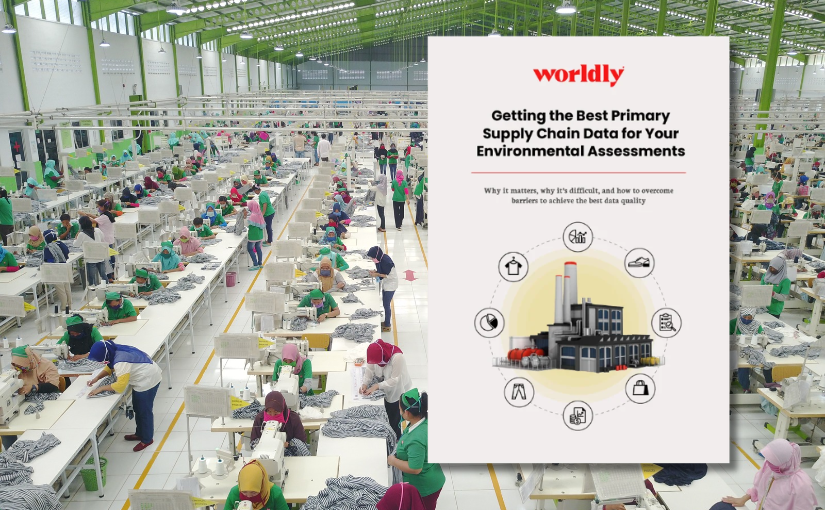
Learn how to collect primary supply chain data for environmental assessments, overcome common barriers, and improve data quality with Worldly.
What is quality supply chain data, and why does it matter?
Why primary data collection is worth the effort
How do supply chain data and primary data help manage cost, risk, and reputation?
Is supply chain data the best way to achieve regulatory compliance and risk mitigation?
What makes collecting supply chain data difficult?
Five ways how brands can help suppliers collect better quality supply chain data
No one can deny that every link in your supply chain is instrumental to meeting your overall business goals. Whether those goals relate to driving growth and profitability, hitting social and environmental targets, reducing risk, increasing resilience, or complying with evolving regulations, your supplier partners play a key role in getting you there.
Long before you can achieve those goals, however, you have to know where you currently stand. Supply chain data is the roadmap that helps you get from where you are now to your intended destination. The challenge is, when it comes to supply chain data, your insights are only as valuable as your data is accurate and complete. And your data is only as accurate as what your suppliers provide.
Getting the highest quality, most accurate supplier data possible is mission-critical to attaining your business goals, but it’s easier said than done. In this guide, we’ll start by defining what it takes to get the best data quality, and then show you how to overcome common challenges that stand in the way of getting the data you need to drive business impact.
Everyone would like better quality data, but what do we mean when we say that? There is no definitive answer for what constitutes better quality supply chain data. After all, “better” is relative. For some suppliers, collecting any data at all is a great first step. For those that have been collecting it for years already, increasing the data completeness and accuracy may be a higher priority goal.
For the purpose of this guide, we will quantify data quality by measuring a few key criteria:
1. Completeness: Did the supplier ensure all the required data is present, accurate, up-to-date, consistent, and relevant?
2. Outlier detection: Were any exceptional values or deviations flagged in the supplier’s data?
3. Verification: Was the supplier’s data independently verified?
Using these criteria, we will consider data of the highest quality when the assessment is complete, there are relatively few outliers, and the collected data was verified by a third party.
It’s not enough to ask your suppliers to simply “provide data.” To achieve your business goals, brands, retailers, and manufacturers that want to measure their upstream impact have to come to the table with a thoughtful approach about what they’re asking from their partners.
First, you’ll want to evaluate whether you’re asking your suppliers to gather primary data (data obtained directly from their actual facility outputs), or whether they will use secondary data such as data models or averages to estimate data. Each method of data gathering has benefits and drawbacks, and the three methods exist on a sliding scale of effort and accuracy.
Using industry, or product-level, averages gives you a metric that’s based on the average, which is lower-effort but has downsides such as being less timely, less complete, and less context-relevant. Leveraging data models, including AI-driven ones, helps suppliers apply basic assumptions and tap into industry-wide insights for a more informed, scalable view of baseline risk.
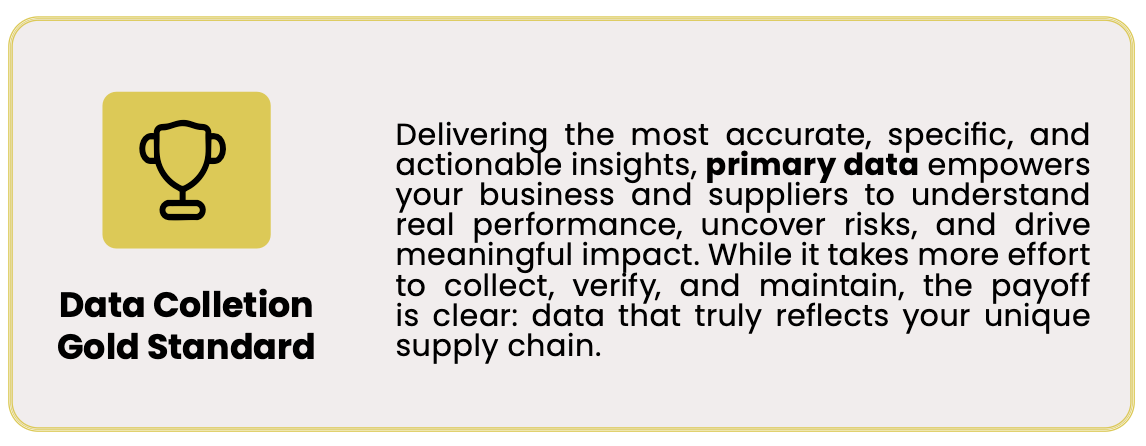
What makes for quality data for both you and your suppliers is similar to what makes for good goal setting. It’s about having data that is measurable, accurate, actionable, trackable over time, and benchmarkable, meaning you can tell whether you and your suppliers have actually improved over time, or not.
Because primary data is the only type that is benchmarkable, it’s worth putting in the effort to collect and maintain it. Estimations and AI models may get you started on a data-based improvement plan, but primary data shows progress you can prove, and moreover, progress that’s relevant to the context of your operation.
Primary data is also beneficial for brands aiming to comply with certain regulatory requirements. While not mandated (as of 2025), primary data is the gold standard for achieving accuracy and transparency about your supply chain’s impact. Without it, you may be under- or overestimating your company’s environmental footprint, which impedes the goal of making real-world improvements. And, while today’s regulations don’t require the input of primary data, those who start collecting it sooner will be at a competitive advantage if it becomes required in the future.
You can’t manage what you don’t measure, so the saying goes. It’s true in regard to your business risk, and it’s true in regard to your social and environmental goals. Your suppliers are key to both because they contribute to the social and environmental impact of your corporate Scope 3 emissions, which are where most of the carbon impact resides.
Poorly managed social and environmental factors in your supply chain can have a ripple effect on your reputation with potential customers and investors alike. Understanding how your products are manufactured and how your suppliers source their goods and materials isn’t just important for setting lofty goals to use in slick marketing materials. It’s a vital part of managing costs, risks, and reputation.
Even suppliers that are a few levels removed from your finished product have the ability to influence (both positively and negatively) your overall social and environmental impact. Each step in your value chain is a point of risk, where weather disasters or social upheaval can drag down your business, slow your delivery, and break your processes overnight. Getting your arms around this data isn’t a nice-to-have: It’s key in future-proofing your business.
A 2024 report by CDP and the Boston Consulting Group found that Scope 3 suppliers are responsible for 26 times the amount of emissions found in Scope 1, across a wide range of industries. For brands and retailers, this means understanding the environmental impacts of each supplier in your supply chain is vital to hitting sustainability targets, ensuring compliance, and reducing risk.
The regulatory landscape is rapidly evolving to mandate transparency, for example: The EU’s Corporate Sustainability Due Diligence Directive (CSDDD), which went into effect in July 2024, requires companies to identify and address adverse human rights and environmental impacts throughout their global value chains. In the U.S., California’s SB 253 mandates that U.S. companies with over $1 billion in annual revenue that do business in California publicly report their complete supply chain emissions starting in 2027 for 2026 data. This will affect an estimated 5,400 companies globally.
While legal and regulatory requirements allow companies to use estimates and other non-primary data sources, having access to primary supply chain data is a best practice for companies looking to do more than just check the box on their social and environmental compliance duties. Because what takes place in your supply chain has very real impacts on the people, communities, and environments involved in creating your products, collecting primary data is the best way to demonstrate true, meaningful progress year-over-year
If getting quality primary data from your supply chain partners were easy, then everyone would do it. Unfortunately, there are several barriers that drive businesses toward data models and averaging tools to account for their suppliers’ impact.
It takes manual labor to collect quality primary data, which may mean disrupting other business efforts to dig into data sources that are often difficult to access or housed outside of a digital system.
Even when supply chain partners are willing to do the work of providing primary data, it’s less useful (and more work for everyone) when they provide it in a variety of formats, through disparate channels, and saved in spreadsheets or other homegrown reporting methods.
Requirements can vary brand to brand, and often brands themselves are not experts when it comes to measuring and evaluating social and environmental data. This can lead to suppliers being asked to measure the same output and to collect repetitive or unproductive data. The strain of repeated assessments can make it more difficult for suppliers to provide the best data across every assessment they’re asked to complete.
This list of obstacles is not definitive, but it is a good starting point to understanding the challenges your suppliers face when you ask them to complete social and environmental assessments.
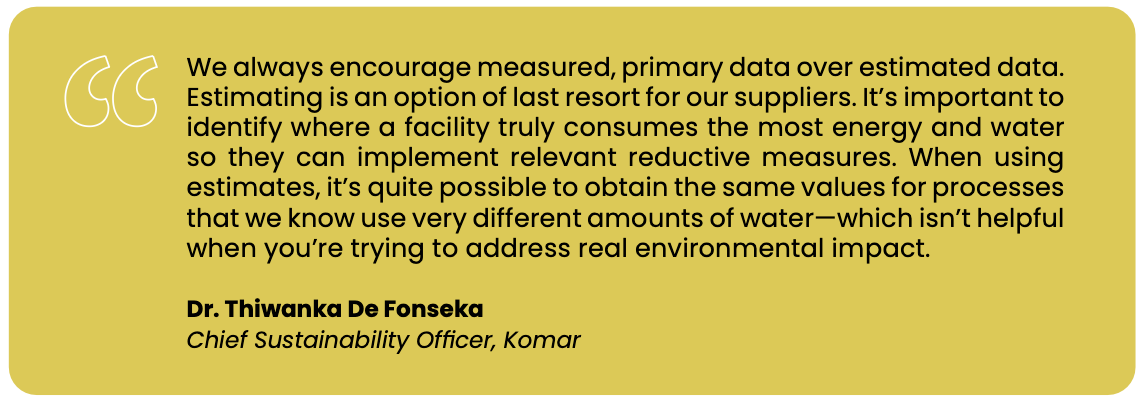
For anyone looking to overcome barriers that stand in the way of their suppliers’ primary data collection, Komar offers a roadmap of best practices. According to Dr. Thiwanka De Fonseka, Chief Sustainability Officer at Komar, the business has achieved a 100 percent completion rate among its Tier 1 and Tier 2 suppliers through a variety of methods, including:
Komar’s methods demonstrate how a combination of mandatory completion along with the right support and incentives can lead to success and real-world benefits for brands and suppliers alike.
As a brand, retailer, or manufacturer, you have to thread the needle between achieving your own goals, complying with mandatory regulations, and keeping good relationships with your upstream supply chain partners. While challenges to collecting high-quality data exist, there are steps you can take to overcome them.
One example of a standardized assessment tool is Cascale’s Higg Index, available through Worldly. Developed by the global nonprofit alliance Cascale, in collaboration with Worldly, the Higg Index is the leading measurement methodology and suite of tools for assessing the environmental and social impact of value chains.
Ad hoc data collection is exhausting for you and your partners for several reasons:
An essential component of any data collection effort is for retailers, brands, and manufacturers to collaborate with their suppliers on a shared assessment or standardized industry data collection format.
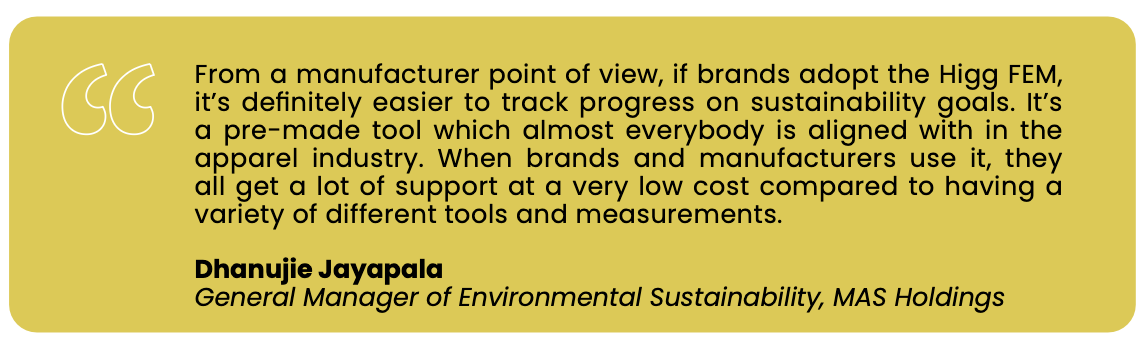
By using a systematic data collection approach, you make it easier for suppliers to comply with your assessment requirements. Maintaining a standardized reporting system also makes yearly updates less arduous, which helps relieve facilities’ assessment fatigue and increases your partners’ assessment completion rates. It can also help prevent a data overload, where you end up with more data than you can manage.
One more benefit of using a standardized and shared assessment is the opportunity it provides for every member of the value chain to collaborate and learn from one another. A standardized assessment framework fosters synergy across the industry and helps advance environmental and social progress collectively.
If you’re currently experiencing “data overload” check out our guide, “Drowning in Sustainability Data? Turn Data Overload into Impactful Action.”
Data from Worldly’s platform shows a strong relationship between the frequency, type, and content of emails brands send to suppliers and supplier completion rates.
Getting the best and highest quality data from your supplier partners requires their buy-in. And that starts with helping them understand the “why” behind your data requests, which may sometimes feel onerous given all the responsibilities they juggle in the course of their daily business.
The best way to overcome multiple challenges is to thoroughly engage with your facilities’ leaders through discussions that connect assessment questions and the key performance indicators you’re measuring to their core business functions, and their future success. If your partners can understand your business goals and the reasons behind them, then you’re far more likely to get real alignment.
This step also includes talking with your suppliers about how you’ll use the data they provide. There is often a lack of clarity around what brands are actually doing with supplier data, and whether they’re using it in their decision making at all. Suppliers want to understand how the primary data they’ve worked hard to collect will be factored into sourcing and purchasing decisions. Having transparent discussions about how you use supplier data can help suppliers understand the requests as something beyond an exercise in checking boxes for their customers.
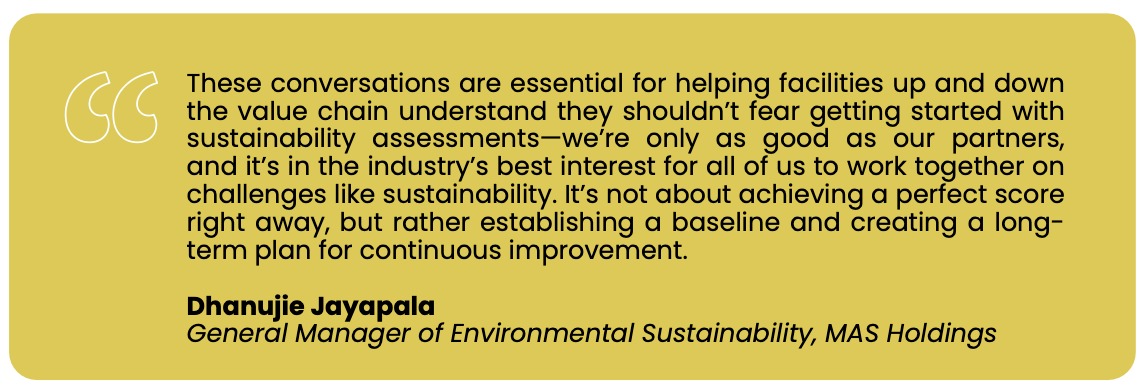
Remember, the reason primary data is key to achieving environmental and social sustainability goals (and limiting their associated risks) is that data modeling and industry “averages” can’t give you actionable business insights. Communicating this to your supplier partners can actually help them achieve their own business objectives when they can evaluate their real efficiency and governance practices against their peers.
To engage your suppliers in gathering their primary data, read “The Responsible Brand’s Guide to Maximizing Supplier Engagement” and learn the five best practices that have helped Worldly’s brand and retailer customers achieve standout completion rates of the Higg FEM. Higg FEM is developed by the global nonprofit alliance Cascale and available exclusively on Worldly.
There’s no need to ask your facilities to maintain massive spreadsheets where a single cell miscalculation could invalidate columns upon columns of data. Modern technology can lighten the lift for everyone, particularly those suppliers responsible for collecting environmental and social data.
By using a data management platform, you and your partners can take advantage of features like automatic outlier detection, which flags possible inaccuracies to your suppliers. This kind of flag can save hours of time upfront by giving suppliers the chance to double-check unusually high or low numbers in their primary data reports.
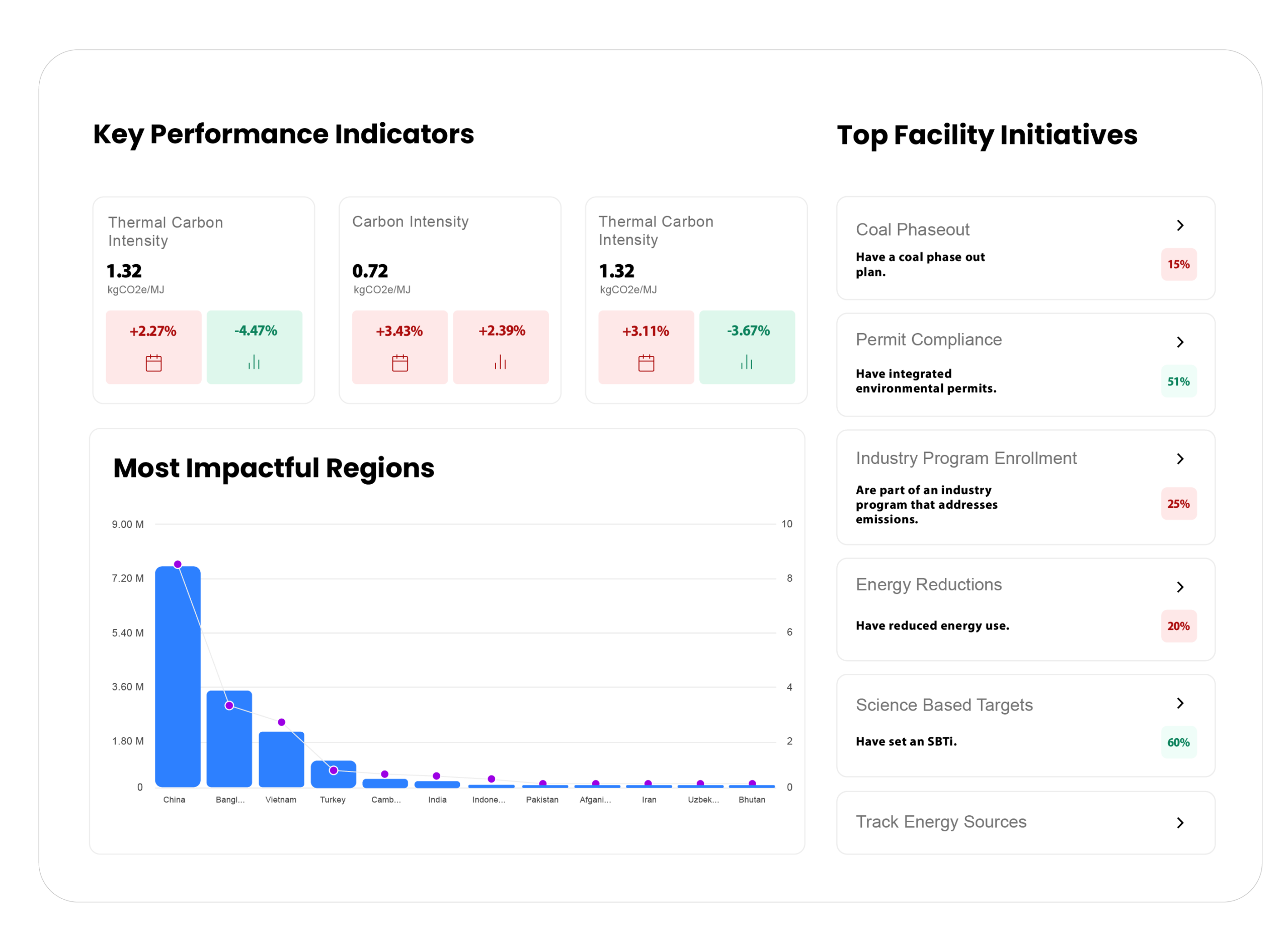
A high-tech approach to primary data collection should also include a shared dashboard that gives all stakeholders visibility into assessment completion, performance against key metrics, and how a supplier measures up to industry standards.
Misreporting is a risk no matter where you stand in the value chain, which is why it’s essential to engage an objective third party to assess the quality of a supplier’s data. Retailers, brands, and manufacturers that want to ensure they’re working with the most accurate data possible will make it a requirement for their supplier partners to use a third-party data verifier.
Involving a third party also underscores why you should use standardized reports and a technology-forward reporting platform. Being able to seamlessly share data, validation, questions, and resolutions back and forth within a consolidated workflow reduces the strain and cost of reporting for all stakeholders involved.
Brands that see lower assessment adoption also tend to see lower variance between self-reported and verified scores, meaning both types of scores trend lower.
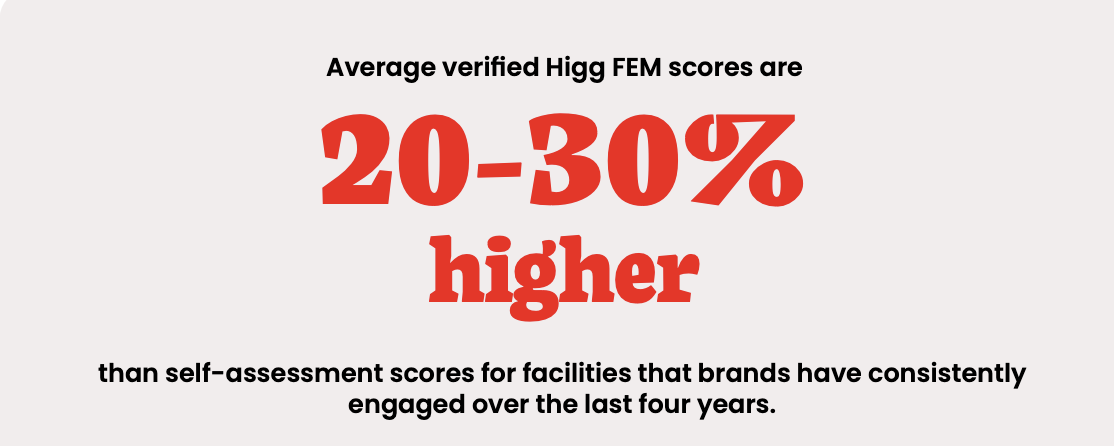
Verification isn’t just a benefit to brands that want to ensure their suppliers’ data is correct. Data from the Worldly platform shows facilities that verify their Higg FEM assessments average 20-30 percent higher scores than on the same year’s self-assessment. This implies that facilities may be missing areas that benefit them, and that could have positive impacts on their brand relationships, by not going through the verification process.
When your suppliers provide high-quality primary data, you have the insights you need to increase transparency and reduce risk in your supply chain. With the benefits you reap, it makes sense to prioritize, or even incentivize good behavior (and good data collection). There are multiple ways brands, retailers, and even outside parties can do this through their own actions.

Worldly platform data shows examples of brands achieving 100 percent adoption among Tier 1 facilities, including those that make up 80 percent of Tier 2 spend, when they make it clear that they prioritize the completeness and quality of their suppliers’ data by tracking adoption closely, using clear “requirement” language in their communications, and following up with non-complying facilities.
“Quantitative data is not the endpoint of the journey. It’s about the relationship with our suppliers. The point of the quantitative data is to have better qualitative conversations with them.”said Susan Scow, Sustainability Impact Specialist from Eileen Fisher.
When organizations see a direct business impact from data collection, they’re more likely to engage in the process. And businesses that measure their environmental and social metrics are more likely to take action on them.
An analysis of Worldly data found that sporting and outdoor goods facilities that conduct energy audits are 17% more likely to reduce energy usage.
If you’ve sufficiently engaged with your supplier partners and incentivized them to participate in third-party reviewed quality data collection, their adoption will largely rest on your ability to remove barriers from the collection and reporting process itself.
Worldly helps retailers, brands, and manufacturers engage their upstream suppliers and align on quality primary data.
Take the next step toward achieving the best quality supply chain data to reduce your risks and maximize your impact. Speak with Worldly today.


© 2026 Worldly. All Rights Reserved